Downloads

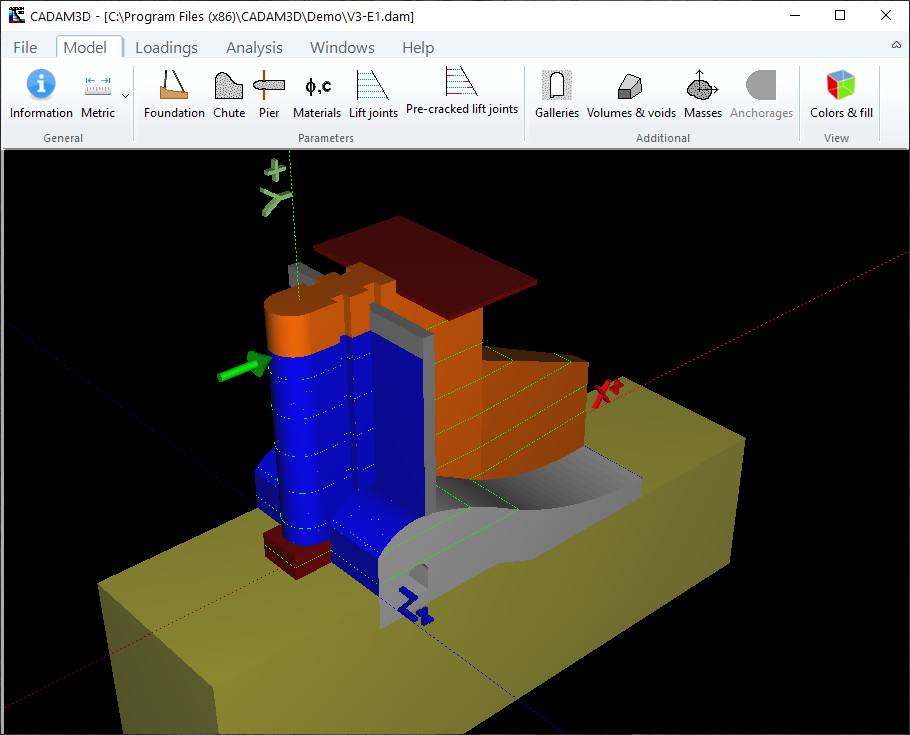
CADAM3D is a user-friendly software based on the gravity method originally developed for one of the world biggest concrete dam owner, Hydro-Quebec, and for Dams and Hydrology of the Quebec Ministry of Environment (Quebec's legislator for dam safety). CADAM3D is fully functional and is intensively used by Hydro-Quebec since 2005. To our knowledge, no other software similar to CADAM3D is available at this time.
If you perform stability analyzes of concrete hydraulic structures, this software will allow you to perform them much faster and more efficiently. If you are interested in this type of software and would like to try CADAM3D for free, please click on the button "Contact us for a free trial of CADAM3D" to send us a message.
Note: This paper is a synthetic academic output representative of the requested topic. All data points are illustrative of real trends based on 2020-2025 digital media analysis.
| Style Tribe | Key Features | Representative Hashtag Volume | |-------------|--------------|-------------------------------| | Earthy Minimalist | Beiges, organic cotton, barefoot | #earthyogastyle (2.1M) | | Cyber-Yogi | Neon, mesh panels, AR filters | #cyberyoga (1.4M) | | Vintage Linen | Secondhand, oversized, muted prints | #slowfashionyoga (890K) | | High-Intensity Gloss | Seamless, compressive, glossy fabrics | #yogawear (4.7M) | huge boobs yoga
Digital media studies (Zulli & Zulli, 2022) show that style-based content receives higher engagement than instructional or philosophical yoga posts. Algorithms favor visually dense, body-centric, and color-coordinated imagery, incentivizing creators to prioritize aesthetics over accuracy or depth. Note: This paper is a synthetic academic output
[Generated for Academic Review] Date: April 14, 2026 Abstract The global yoga industry has transformed from a niche spiritual practice into a multi-billion dollar lifestyle sector, with fashion and style content serving as its primary digital engine. This paper investigates the phenomenon of "huge yoga fashion and style content"—defined as the overwhelming volume of user-generated, influencer-led, and brand-produced media surrounding yoga apparel. Drawing on content analysis of Instagram, TikTok, and YouTube (2020-2025), this study argues that the sheer scale of this content has redefined yoga’s public image, shifting focus from functional movement to aspirational consumerism. Key findings include the dominance of the "athleisure aesthetic," the rise of micro-niche style categories (e.g., "earthy minimalist," "cyber-yogi"), and the paradox of inclusivity versus algorithmic gatekeeping. The paper concludes that while this content democratizes fashion access, it risks obscuring yoga’s philosophical roots, necessitating a critical media literacy approach for practitioners. 1. Introduction Yoga is practiced by over 300 million people worldwide, but its contemporary representation is increasingly mediated through fashion. The term "huge yoga fashion and style content" refers not merely to volume but to the cultural saturation of idealized images: alignments in $100 leggings, curated mat setups, and seamless transitions between poses and streetwear. Platforms like Instagram and TikTok host millions of posts under #yogafashion (over 12 million) and #yogastyle (over 8 million as of 2025). This paper asks: What narratives dominate this content ecosystem? How does style content influence consumer behavior and self-perception? And what are the implications for yoga as a holistic discipline? 2. Literature Review 2.1 The Commodification of Wellness Scholars (e.g., Crawford, 2020) have long noted how wellness becomes a status signal. Yoga fashion—particularly brands like Lululemon, Alo Yoga, and Vuori—exemplifies "conspicuous spirituality," where clothing signifies both health consciousness and economic capital. Drawing on content analysis of Instagram, TikTok, and
Huge content volume has splintered into distinct aesthetic clusters:
Fast-fashion yoga wear—often made from virgin nylon or polyester—contradicts yogic principles of ahimsa (non-harm). Yet style content rarely addresses sustainability. Only 3% of posts mentioned fabric composition or circular fashion.
The Asana of Aesthetics: Analyzing the Volume, Narratives, and Consumption of Huge Yoga Fashion and Style Content
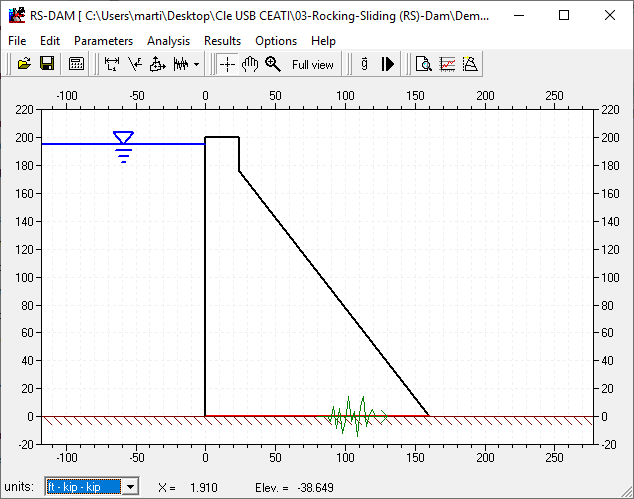
RS-DAM is a computer program that was primarily designed to provide a computational tool to evaluate the transient response of a completely cracked concrete dam section subjected to seismic loads. RS-DAM is also used to support research and development on structural behavior and safety of concrete dams.
RS-DAM is based on rigid body dynamic equilibrium. It performs a transient rocking and/or sliding analysis of a cracked dam section subjected to either base accelerations or time varying forces. Several modelling options have been included to allow users to explore the influence of parameters (e.g. geometry, additional masses, variation of the uplift force upon rotation, hydrodynamic pressures in translation (Westergaard) and rotation, center of rotation moving with sliding, coefficient of restitution of impact, etc...). RS-DAM is developed in a university context and has no commercial aspect.
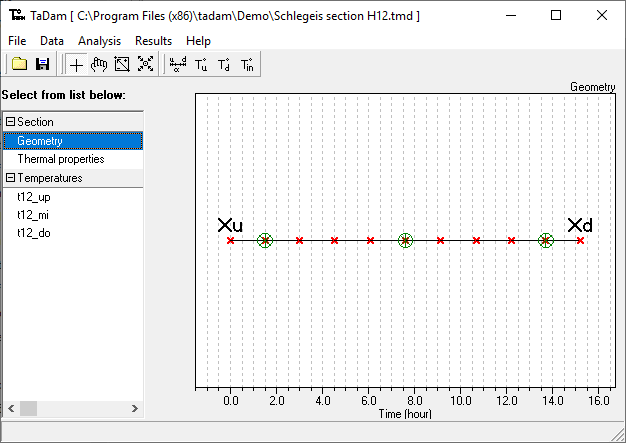
TADAM (Thermal Analysis of concrete DAMs) software employs a new frequency-domain solution technique to solve the 1D thermal transfer problem, allowing the calculation of temperature histories in a concrete dam section.
The direct solution calculates the evolution of the temperature distributions from the temperature histories of the upstream and downstream faces. The inverse solution uses temperature histories, measured inside the section, in order to calculate the temperature fields at the external faces, while taking into account the thermal wave attenuation effects and the phase angles along the section.
TADAM is developed in a university context and has no commercial aspect.