Spoofer May 2026
*SysInfo PST File Splitter Fully Secured Free Download.
*SysInfo PST File Splitter Fully Secured Free Download.
Know the Key Advantages of the Online PST File Splitter by SysInfo
Know in what scenarios the Sysinfo PST Split Tool is a smart choice
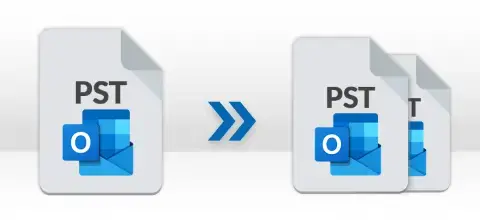
Sometimes, users look for a solution to divide their large PST files into multiple PST files. Then, by opting for SysInfo PST File Splitter open source, you can easily break the big Outlook PST files without any data loss.
Oversized Outlook PST files are more prone to corruption. Splitting PST into multiple smaller PSTs reduces the chance of corruption. The best tool to use is SysInfo PST Splitter allows users to Split large PST Files directly.
Users wish to reduce the size of Outlook data files, to manage PST data efficiently. Also, it is easy to export their data to Outlook. Hence, by using SysInfo PST File Splitter Utility, users can easily reduce the size of the oversized PST.
Humanity formalized this manipulation in the art of military deception, elevating the spoofer to a strategic asset. In warfare, a spoofer does not merely hide; he creates a convincing false reality to control the enemy’s decision-making. During World War II, General Patton’s fictional First U.S. Army Group—complete with inflatable tanks, dummy aircraft, and fake radio traffic—successfully spoofed German intelligence into believing the D-Day landings would occur at Calais, not Normandy. This was large-scale, physical spoofing. In modern electronic warfare, spoofing has become granular and precise. GPS spoofers, for example, broadcast counterfeit satellite signals to trick a ship’s navigation system into believing it is somewhere it is not. In 2011, Iranian forces claimed to have downed a sophisticated U.S. RQ-170 Sentinel drone not by shooting it, but by spoofing its GPS, tricking the autopilot into landing on an Iranian airfield instead of returning to its base. The military spoofer demonstrates that in a conflict of systems, the ability to corrupt input data is often more powerful than any explosive.
The most pervasive and unsettling domain of the spoofer today, however, is cyberspace. Digital identity is a fragile construct, built on usernames, IP addresses, and cryptographic certificates—all of which can be forged. The cyber spoofer operates with a range of motives. At the low end is the prankster using caller ID spoofing to make a friend’s phone appear to ring from the White House. At the criminal extreme is the phishing attacker who spoofs a legitimate email address (e.g., security@paypal.com ) to steal credentials. More technically devastating is the ARP spoofer on a local network, who tricks computers into sending their traffic through the attacker’s machine, enabling silent surveillance (man-in-the-middle attack). Unlike the natural mimic who seeks only survival or a meal, the cyber spoofer can erase financial accounts, steal intellectual property, or, as seen in attacks on power grids, cause physical destruction. The cyber spoofer’s ultimate weapon is the erosion of trust itself; once a user cannot trust an email from their boss or a software update from their operating system, the digital economy grinds to a halt. spoofer
The existence of the spoofer has, in turn, spawned an entire industry of authentication. Anti-spoofing measures are the arms race of our time. In nature, prey species evolve to distinguish subtle details of the mimic. In cybersecurity, we deploy SPF and DKIM email protocols to verify senders, GPS military codes to encrypt navigation signals, and biometric liveness detection to ensure a fingerprint isn’t a silicone replica. The spoofer thus plays a paradoxical role: while a destructive force, it is also a catalyst for resilience. Every successful spoof forces a system to patch its vulnerabilities, making it stronger. The spoofer is the ultimate stress-tester of trust. Humanity formalized this manipulation in the art of
In an era defined by the relentless pursuit of authenticity—from verified social media accounts to blockchain-ledger provenance—the figure of the "spoofer" stands as a defiant counter-narrative. To spoof is to deceive by assuming a false identity, mimicking a trusted signal, or fabricating a reality that does not exist. Far from being a simple synonym for a liar or a thief, the spoofer is a sophisticated operator who exploits the inherent trust embedded within complex systems. Whether as a harmless prankster, a cunning predator in the wild, a lethal military tactician, or a cybercriminal, the spoofer reveals a fundamental vulnerability: systems are only as secure as the authenticity of their inputs. By examining the spoofer through the lenses of biology, warfare, and digital technology, one uncovers a profound truth about security and trust in the modern world. When those signals can be duplicated
In conclusion, the spoofer is far more than a common fraud. It is a universal archetype representing the exploitation of trust, from the coral reef to the battlefield to the server rack. The spoofer reminds us that reality is not a given but a consensus based on signals. When those signals can be duplicated, manipulated, or invented, the consensus shatters. While society rightly criminalizes the malicious spoofer who steals and harms, we cannot ignore the uncomfortable truth that the ability to spoof—to adapt, to mislead, to present a strategic illusion—is a deeply ingrained feature of complex, competitive systems. To defend against the spoofer is to constantly ask a question that has become the central anxiety of the information age: how do you know what is real?
Sysinfo PST Splitter Tool specifications, users can follow before use of this utility for ease of working

| Version: | 23.3 |
| Size: | 43 MB |
| License: | Multiple User |
| Release Date: | 20 March, 2023 |
| Edition: | Home, Administrator, Technician, and Enterprise |

| Processor: | Intel® Core™2 Duo E4600 Processor 2.40GHz |
| RAM: | 8 GB RAM (16 GB Recommended) |
| Disk Space: | Minimum Disk Space - 512 MB |
| Support Outlook Versions: | Office 365, 2019, 2016, 2013, 2010, 2007, 2003, 2002, 2000, 98, and 97. |
| Support MS Exchange Server: | 2019/ 2016/ 2013/ 2010/ 2007/ 2003/ 2000/ 5.5 and 5.0. |
| Supported Windows: | 11, 10/8.1/8/7/, 2008/2012 (32 & 64 Bit), and other Windows versions. |
Easy four steps to divide PST files into multiple smaller Outlook data files.


SysInfo's Award-Winning Software, Highly Rated by Experts in the Best Category.




Cnet rate a 5-star rating to SysInfo Split PST File Tool for its extraordinary performance of splitting PST files into multiple small PST. Furthermore, it recommends users use it because the utility is competent enough to maintain folder hierarchy and ignore duplicate emails with 100% accuracy. View more
SysInfo PST Splitter got 5-start by Software Suggest for its unbreakable performance to safely and securely split Large Outlook PST files (Email, calendars, contacts, tasks) into individual PST files without losing any data. View more
Use the trial version to evaluate the tool and then purchase the premium version
| Product Features | Free Version | Full Version |
|---|---|---|
| Split large PST file | 50 Items per folder | All |
| Split PST File by Size | 50 Items per folder | All |
| Split PST by Date | 50 Items per folder | All |
| Split PST file by the sender | 50 Items per folder | All |
| Split PST file by Folder | 50 Items per folder | All |
| Ignore Duplicate Email | ||
| Feature to define PST file size | ||
| Apply Password & Show Password | ||
| Date Filter | ||
| Single File and Separate PST for Selected Folder | ||
| Create Single File & Create Separate PST | ||
 |
Download | Buy Now |
Humanity formalized this manipulation in the art of military deception, elevating the spoofer to a strategic asset. In warfare, a spoofer does not merely hide; he creates a convincing false reality to control the enemy’s decision-making. During World War II, General Patton’s fictional First U.S. Army Group—complete with inflatable tanks, dummy aircraft, and fake radio traffic—successfully spoofed German intelligence into believing the D-Day landings would occur at Calais, not Normandy. This was large-scale, physical spoofing. In modern electronic warfare, spoofing has become granular and precise. GPS spoofers, for example, broadcast counterfeit satellite signals to trick a ship’s navigation system into believing it is somewhere it is not. In 2011, Iranian forces claimed to have downed a sophisticated U.S. RQ-170 Sentinel drone not by shooting it, but by spoofing its GPS, tricking the autopilot into landing on an Iranian airfield instead of returning to its base. The military spoofer demonstrates that in a conflict of systems, the ability to corrupt input data is often more powerful than any explosive.
The most pervasive and unsettling domain of the spoofer today, however, is cyberspace. Digital identity is a fragile construct, built on usernames, IP addresses, and cryptographic certificates—all of which can be forged. The cyber spoofer operates with a range of motives. At the low end is the prankster using caller ID spoofing to make a friend’s phone appear to ring from the White House. At the criminal extreme is the phishing attacker who spoofs a legitimate email address (e.g., security@paypal.com ) to steal credentials. More technically devastating is the ARP spoofer on a local network, who tricks computers into sending their traffic through the attacker’s machine, enabling silent surveillance (man-in-the-middle attack). Unlike the natural mimic who seeks only survival or a meal, the cyber spoofer can erase financial accounts, steal intellectual property, or, as seen in attacks on power grids, cause physical destruction. The cyber spoofer’s ultimate weapon is the erosion of trust itself; once a user cannot trust an email from their boss or a software update from their operating system, the digital economy grinds to a halt.
The existence of the spoofer has, in turn, spawned an entire industry of authentication. Anti-spoofing measures are the arms race of our time. In nature, prey species evolve to distinguish subtle details of the mimic. In cybersecurity, we deploy SPF and DKIM email protocols to verify senders, GPS military codes to encrypt navigation signals, and biometric liveness detection to ensure a fingerprint isn’t a silicone replica. The spoofer thus plays a paradoxical role: while a destructive force, it is also a catalyst for resilience. Every successful spoof forces a system to patch its vulnerabilities, making it stronger. The spoofer is the ultimate stress-tester of trust.
In an era defined by the relentless pursuit of authenticity—from verified social media accounts to blockchain-ledger provenance—the figure of the "spoofer" stands as a defiant counter-narrative. To spoof is to deceive by assuming a false identity, mimicking a trusted signal, or fabricating a reality that does not exist. Far from being a simple synonym for a liar or a thief, the spoofer is a sophisticated operator who exploits the inherent trust embedded within complex systems. Whether as a harmless prankster, a cunning predator in the wild, a lethal military tactician, or a cybercriminal, the spoofer reveals a fundamental vulnerability: systems are only as secure as the authenticity of their inputs. By examining the spoofer through the lenses of biology, warfare, and digital technology, one uncovers a profound truth about security and trust in the modern world.
In conclusion, the spoofer is far more than a common fraud. It is a universal archetype representing the exploitation of trust, from the coral reef to the battlefield to the server rack. The spoofer reminds us that reality is not a given but a consensus based on signals. When those signals can be duplicated, manipulated, or invented, the consensus shatters. While society rightly criminalizes the malicious spoofer who steals and harms, we cannot ignore the uncomfortable truth that the ability to spoof—to adapt, to mislead, to present a strategic illusion—is a deeply ingrained feature of complex, competitive systems. To defend against the spoofer is to constantly ask a question that has become the central anxiety of the information age: how do you know what is real?
Verified Customer Reviews for SysInfo PST File Split Tool
Step 1: Install and Start the SysInfo PST File Splitter.

Step 2: Now, click on Add Files and add PST files to split.

Step 3: After adding the PST files to the software, click Next.

Step 4: Select the folders and choose the Split option as per needed.

Step 5: Choose optional features and define the destination path.

Step 6: Finally, click on Split, and the splitting process begins.