Electron Dash

Electron Dash

Ready to play the ultimate 3D space tunnel runner?

3,782 Online

Ultimately, "A Living Chicken, a Fried Egg, and a Dark Future" succeeds because it refuses to offer easy resolutions. Sheldon does not become a cheater; he simply works harder and accepts a less-than-perfect result. Mary does not receive a sign; she learns to live without one. George and Missy do not fix their mistake; they simply share it. The title’s three images—the living chicken (a sign that fails), the fried egg (a cheat that fails), and the dark future (the anxiety that remains)—coalesce into a single, mature thesis: life is not a problem to be solved but a mystery to be endured. Young Sheldon has always been about the origin story of a genius, but in this episode, it becomes something more: a poignant reminder that even the smartest person in the room cannot outthink love, doubt, or the simple, messy grace of a father and daughter sharing a secret in a truck.

The episode’s A-plot centers on Sheldon Cooper’s first encounter with academic inadequacy. Facing a difficult exam in Professor Boucher’s engineering class, Sheldon—who has never known anything but effortless mastery—is confronted with the possibility of receiving a B. For any other child, this is trivial; for Sheldon, it is existential. The episode brilliantly visualizes his spiraling anxiety through his desperate, illogical attempts to cheat, culminating in the absurd spectacle of writing formulas on a hard-boiled egg (the “fried egg” of the title). This is not mere comedy; it is a profound character study. The show demonstrates that Sheldon’s rigid worldview, built on the axiom that intelligence guarantees success, is a fragile construct. His breakdown is not about grades, but about the shattering of his identity. The episode makes a bold narrative choice by having him fail to cheat successfully and ultimately accept a low A-minus—a “failure” that teaches him, and the audience, that effort and vulnerability are necessary components of growth. It is a rare moment where the show allows its titular character to be genuinely human rather than a precocious robot.

Providing the episode’s emotional and comic anchor is the C-plot featuring George Sr. and Missy. Tasked with buying a birthday gift for Mary, the father-daughter duo ends up at a motorcycle bar, where George wins a foul-mouthed parrot in a poker game. This seemingly absurd subplot is, in fact, the episode’s secret heart. The parrot, a chaotic, swearing agent of impropriety, represents everything Mary fears and everything George secretly misses from his youth. But more importantly, it serves as a crucible for the George-Missy relationship. Throughout the series, Missy often feels neglected in the shadow of Sheldon’s genius. Here, George treats her not as a child, but as an accomplice. He shares stories, buys her onion rings, and includes her in his mistake. When they finally give Mary the parrot (which immediately curses), the disaster they create is a bonding experience. The episode concludes not with the parrot’s removal, but with George and Missy sharing a conspiratorial smile. It is a quiet revolution: Missy learns that her father sees her, and George learns that being a good parent sometimes means being a bad husband.

In stark thematic contrast, the B-plot follows Mary Cooper, Sheldon’s devout mother, as she confronts a crisis of faith. Having prayed for her estranged father’s sobriety, she interprets the sudden, inexplicable death of her neighbor’s healthy rooster (the “living chicken”) as a divine sign of impending doom. This storyline is a masterful exercise in tonal balance. On the surface, Mary’s apocalyptic anxiety seems like a gentle mockery of religious superstition, especially when juxtaposed with Sheldon’s scientific anxiety. Yet the episode treats her with profound respect. Her fear is not irrational; it is the language of a woman who has spent her life using faith as a bulwark against chaos. When the predicted disaster fails to materialize, Mary is left not relieved, but existentially unmoored. The episode suggests that for believers, a silent God is more terrifying than a vengeful one. Her eventual, quiet acceptance—that faith means trusting in an unseen plan—is not a defeat but a deeper, more adult form of belief. The parallel with Sheldon is clear: both characters build systems (science and religion) to control the uncontrollable, and both must learn that those systems have limits.

In the pantheon of The Big Bang Theory universe, Young Sheldon distinguishes itself not merely as a prequel, but as a nuanced family dramedy that explores the quiet cataclysms of ordinary life. Season 4, Episode 10, titled "A Living Chicken, a Fried Egg, and a Dark Future," stands as a masterclass in this approach. Written with surgical precision, the episode deconstructs the show’s central thesis—that a prodigy’s genius is both a gift and a curse—by exposing how intellectual precocity cannot inoculate a family against the universal experiences of anxiety, superstition, and failure. Through three interlocking narratives, the episode argues that the most profound threats to a family’s stability often come not from external chaos, but from the internal collapse of faith in oneself, in science, and in each other.


How to play Electron Dash?

  • Random Map

    Each time you restart Electron Dash or respawn after a character dies, you'll enter a brand new map, making every experience unique.

    Random Map
    1
  • 2

    How to operate

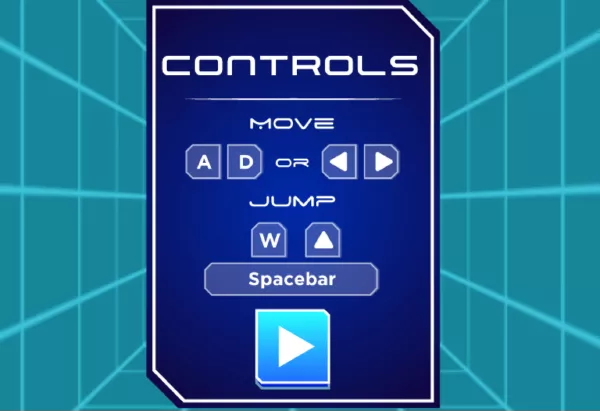
    Use the left and right arrow keys to dodge traps and lasers. The up arrow key lets you jump, but if you prefer using the spacebar to jump, that works too.

    How to operate
  • How to get a higher score

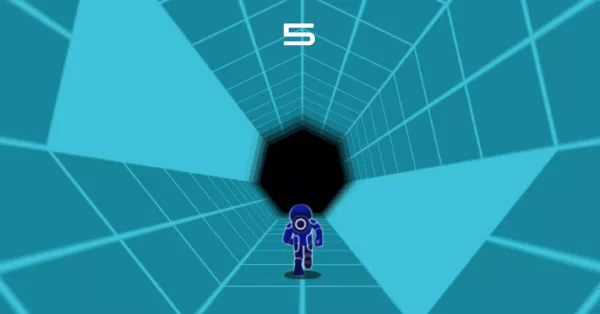
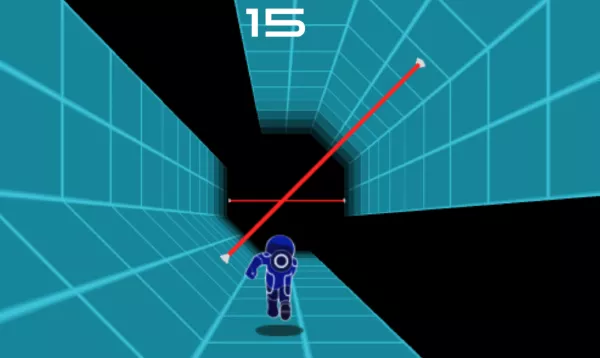
    Watch out for the light-colored tiles in the tunnel — once you step on one, all connected light tiles will collapse, so try to avoid them. Falling into black traps means instant death, and the same goes for red lasers — make sure to dodge them carefully. Keep trying to improve your reflexes, and stay calm when deciding your next jump — that's the key to earning a higher score.

    How to get a higher score
    3
  • 4

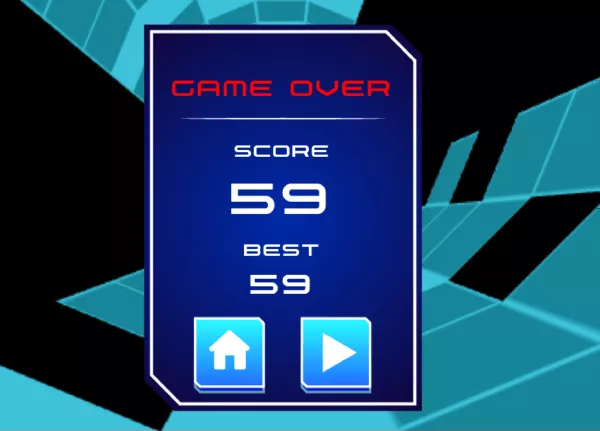
    Game Over

    You only have two lives — the game ends after you fail twice. At the end, you'll see your current score along with your all-time high score. Legend has it that 90% of players can't break the 200-point mark!

    Game Over
  • Game Easter Eggs

    During your dash, there's a small chance you'll come across a heart-shaped item. This item is extremely important — make sure to grab it! It gives you an extra life!

    5

Frequently Asked Questions

What is Electron Dash?

Electron Dash is a 3D space running game where players sprint through glowing tunnels, jump over gaps, and dodge lasers. It's free to play and works great on browsers, Chromebooks, and mobile devices.

Is Electron Dash unblocked?

Yes! You can play Electron Dash unblocked on most school and work networks directly from this site or platforms like Math Playground, Cool Math Games, and Hooda Math.

What is the world record in Electron Dash?

The official world record is not documented, but many top players claim to reach over 400 points. Think you can beat it? Play now and challenge the leaderboard!

Where can I play Electron Dash?

You can play Electron Dash right here at ElectronDash.org or on sites like MathPlayground, Cool Math Games, and even GitHub Pages mirrors.

Is Electron Dash a fast-paced game?

Yes, Electron Dash challenges your reflexes with high-speed gameplay, requiring precise jumps and fast reaction to obstacles in glowing neon tunnels.

Do I need to download Electron Dash to play?

No. You can play Electron Dash instantly in your browser without downloading anything. It works smoothly on desktop, mobile, and tablet.

Does Electron Dash have 3D graphics?

Yes, Electron Dash features immersive 3D visuals with smooth performance and vibrant neon themes to elevate your gaming experience.

Can I play Electron Dash on mobile and Chromebook?

Absolutely. Electron Dash is mobile-friendly and works perfectly on Chromebooks, making it a popular choice for classroom and home gaming sessions.

How does the scoring system work in Electron Dash?

You earn points the longer you survive and the farther you run. Compete to beat the high score or even attempt to break the world record!

Is Electron Dash featured on trusted gaming sites?

Yes. Electron Dash is listed on popular educational gaming platforms like Math Playground, Cool Math Games, and Hooda Math, making it a trusted and accessible game across the web.

Key Features of Electron Dash

Young Sheldon S04e10 Dsrip Hot! -

Ultimately, "A Living Chicken, a Fried Egg, and a Dark Future" succeeds because it refuses to offer easy resolutions. Sheldon does not become a cheater; he simply works harder and accepts a less-than-perfect result. Mary does not receive a sign; she learns to live without one. George and Missy do not fix their mistake; they simply share it. The title’s three images—the living chicken (a sign that fails), the fried egg (a cheat that fails), and the dark future (the anxiety that remains)—coalesce into a single, mature thesis: life is not a problem to be solved but a mystery to be endured. Young Sheldon has always been about the origin story of a genius, but in this episode, it becomes something more: a poignant reminder that even the smartest person in the room cannot outthink love, doubt, or the simple, messy grace of a father and daughter sharing a secret in a truck.

The episode’s A-plot centers on Sheldon Cooper’s first encounter with academic inadequacy. Facing a difficult exam in Professor Boucher’s engineering class, Sheldon—who has never known anything but effortless mastery—is confronted with the possibility of receiving a B. For any other child, this is trivial; for Sheldon, it is existential. The episode brilliantly visualizes his spiraling anxiety through his desperate, illogical attempts to cheat, culminating in the absurd spectacle of writing formulas on a hard-boiled egg (the “fried egg” of the title). This is not mere comedy; it is a profound character study. The show demonstrates that Sheldon’s rigid worldview, built on the axiom that intelligence guarantees success, is a fragile construct. His breakdown is not about grades, but about the shattering of his identity. The episode makes a bold narrative choice by having him fail to cheat successfully and ultimately accept a low A-minus—a “failure” that teaches him, and the audience, that effort and vulnerability are necessary components of growth. It is a rare moment where the show allows its titular character to be genuinely human rather than a precocious robot. young sheldon s04e10 dsrip

Providing the episode’s emotional and comic anchor is the C-plot featuring George Sr. and Missy. Tasked with buying a birthday gift for Mary, the father-daughter duo ends up at a motorcycle bar, where George wins a foul-mouthed parrot in a poker game. This seemingly absurd subplot is, in fact, the episode’s secret heart. The parrot, a chaotic, swearing agent of impropriety, represents everything Mary fears and everything George secretly misses from his youth. But more importantly, it serves as a crucible for the George-Missy relationship. Throughout the series, Missy often feels neglected in the shadow of Sheldon’s genius. Here, George treats her not as a child, but as an accomplice. He shares stories, buys her onion rings, and includes her in his mistake. When they finally give Mary the parrot (which immediately curses), the disaster they create is a bonding experience. The episode concludes not with the parrot’s removal, but with George and Missy sharing a conspiratorial smile. It is a quiet revolution: Missy learns that her father sees her, and George learns that being a good parent sometimes means being a bad husband. Ultimately, "A Living Chicken, a Fried Egg, and

In stark thematic contrast, the B-plot follows Mary Cooper, Sheldon’s devout mother, as she confronts a crisis of faith. Having prayed for her estranged father’s sobriety, she interprets the sudden, inexplicable death of her neighbor’s healthy rooster (the “living chicken”) as a divine sign of impending doom. This storyline is a masterful exercise in tonal balance. On the surface, Mary’s apocalyptic anxiety seems like a gentle mockery of religious superstition, especially when juxtaposed with Sheldon’s scientific anxiety. Yet the episode treats her with profound respect. Her fear is not irrational; it is the language of a woman who has spent her life using faith as a bulwark against chaos. When the predicted disaster fails to materialize, Mary is left not relieved, but existentially unmoored. The episode suggests that for believers, a silent God is more terrifying than a vengeful one. Her eventual, quiet acceptance—that faith means trusting in an unseen plan—is not a defeat but a deeper, more adult form of belief. The parallel with Sheldon is clear: both characters build systems (science and religion) to control the uncontrollable, and both must learn that those systems have limits. George and Missy do not fix their mistake;

In the pantheon of The Big Bang Theory universe, Young Sheldon distinguishes itself not merely as a prequel, but as a nuanced family dramedy that explores the quiet cataclysms of ordinary life. Season 4, Episode 10, titled "A Living Chicken, a Fried Egg, and a Dark Future," stands as a masterclass in this approach. Written with surgical precision, the episode deconstructs the show’s central thesis—that a prodigy’s genius is both a gift and a curse—by exposing how intellectual precocity cannot inoculate a family against the universal experiences of anxiety, superstition, and failure. Through three interlocking narratives, the episode argues that the most profound threats to a family’s stability often come not from external chaos, but from the internal collapse of faith in oneself, in science, and in each other.

No Download

Play Electron Dash Instantly

No installation needed. Play Electron Dash online in your browser on mobile, tablet, or desktop.

3D Visuals

Immersive 3D Graphics

Enjoy smooth, vibrant 3D visuals that enhance your experience. Electron Dash delivers both excitement and visual appeal.

Mobile Friendly

Mobile & Chromebook Friendly

Play unblocked on all devices, including Chromebooks. Perfect for quick gaming breaks at school or home.

Challenge Scores

Chase the High Score

Can you beat the world record? Every run gives you a chance to top the global leaderboard in Electron Dash.

Trusted Sites

Trusted by Cool Math & More

Featured on Math Playground, Cool Math Games, and other top gaming sites. Join thousands of players enjoying the fun daily.

Rate electrondash.org

4.5 4,706 votes